Well, this was poorly advertised and poorly begun - in part because it seemed pointless to spend my time on it when I had exactly one
visitor, who I suspect was actually just me checking in on the comments. However, I see that we've had a few more visitors, so it's time to pick it back up again with the continuation of the creation story...
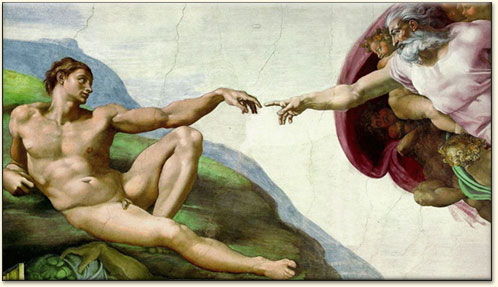
...or perhaps the other creation story. As it happens, the narrative takes a turn here that scholars have long believed indicates a different author entirely. The name of God shifts from Elohim to YHWH Elohim (no Hebrew font...gah), commonly reflected in English by the use of "God" and "LORD God." The chronology is different, with the man being created before the plants (and before the woman; both seem to appear at the same time in the first chapter), and the animals being created in an attempt to find a helper for the man. It's a much more human-centered and physical story, with God intimately involved in forming, breathing, and fashioning life, rather than the more distant act of speaking it into being.
It's a somewhat controversial text. Inerrantists insist that it is consistent with the preceding creation account. The order of the creation of man and woman has been used to enforce women's submission for centuries, and is still used as an argument for a strict definition of gender roles. Egalitarians point toward the term "helper" as a sign that men and women were created equal. Environmentally conscientious Christians see in this passage a precedent for care for the earth; others read in this a license to subjugate plants and animals as things that were created merely for human use. Oops, is my bias showing?
I like controversy and difficult texts, but at some point, you have to ask, "What does the text intend to tell us, about God and about ourselves?" To my mind, this passage is trying to communicate the intimate, physical involvement of God with human beings, and the deep caring for our needs - to the extent of going through the entire animal kingdom trying to find a suitable partner so that the man would not be alone.
What do you think?

No comments:
Post a Comment