A Bible study blog for people on the road and on the run

He had come to Jerusalem to worship and was returning home; seated in his chariot, he was reading the prophet Isaiah. Then the Spirit said to Philip, "Go over to this chariot and join it." So Philip ran up to it and heard him reading the prophet Isaiah. he asked, "Do you understand what you are reading?" He replied, "How can I, unless someone guides me?" And he invited Philip to get in and sit beside him. ~Acts 8:27b-31


Tuesday, February 9, 2010

Genesis 2:5-24


Well, this was poorly advertised and poorly begun - in part because it seemed pointless to spend my time on it when I had exactly one
visitor, who I suspect was actually just me checking in on the comments. However, I see that we've had a few more visitors, so it's time to pick it back up again with the continuation of the creation story...

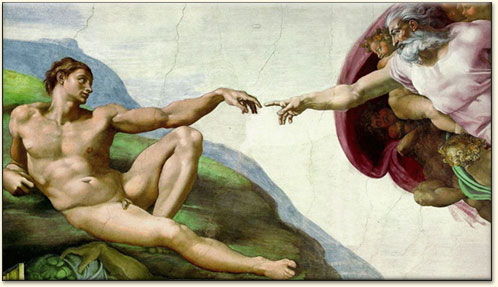
...or perhaps the other creation story. As it happens, the narrative takes a turn here that scholars have long believed indicates a different author entirely. The name of God shifts from Elohim to YHWH Elohim (no Hebrew font...gah), commonly reflected in English by the use of "God" and "LORD God." The chronology is different, with the man being created before the plants (and before the woman; both seem to appear at the same time in the first chapter), and the animals being created in an attempt to find a helper for the man. It's a much more human-centered and physical story, with God intimately involved in forming, breathing, and fashioning life, rather than the more distant act of speaking it into being.

It's a somewhat controversial text. Inerrantists insist that it is consistent with the preceding creation account. The order of the creation of man and woman has been used to enforce women's submission for centuries, and is still used as an argument for a strict definition of gender roles. Egalitarians point toward the term "helper" as a sign that men and women were created equal. Environmentally conscientious Christians see in this passage a precedent for care for the earth; others read in this a license to subjugate plants and animals as things that were created merely for human use. Oops, is my bias showing?

I like controversy and difficult texts, but at some point, you have to ask, "What does the text intend to tell us, about God and about ourselves?" To my mind, this passage is trying to communicate the intimate, physical involvement of God with human beings, and the deep caring for our needs - to the extent of going through the entire animal kingdom trying to find a suitable partner so that the man would not be alone.

What do you think?

Tuesday, January 5, 2010

Week 1 - Let's Start at the Very Beginning

Well, I received two suggestions of books of the Bible to read for this blog. The first was Song of Solomon (thanks, Bill). The other was Genesis, in the hopes of perhaps reading through the entire Bible. Yikes, that would be one long-running blog, but hey, you never know. Anyway, they say that the very beginning is a very good place to start, so that is what we'll do...for now. After Genesis, maybe we'll decide to go out of order and take on Song of Solomon.

So, this week's passage: Genesis 1:1-2:4.

By the way, there are a couple of places you can find texts online in various translations:
Oremus Bible Browser - New Revised Standard Version, which is what we use in worship, and a couple of others.
Bible Gateway - nearly every other translation, including the New International Version, the New American Standard, the New Living Translation, several older translations, and versions in many other languages.

Now, on to the text...

This is one of the most easily recognizable and oft-referenced passages in the Bible, which means that people tend to have a cultural familiarity with it but often don't really pay much attention to the substance. In addition, it's been somewhat overused (and abused, in my opinion) by those who stake all faith on its literal, historical, and scientific factuality.

Apart from its baggage, I think it's one of the most beautiful and evocative passages in the Bible, full of the poetic cadence of "and it was evening and it was morning..." and the vivid imagery of the world springing to life. It sets up the great, overarching story that is to come. We begin with this picture of the fledgling world, fresh and verdant, where everything is just as it should be - where everything is, as God pronounces it, good.

I'm not sure yet who is out there reading this, but I'd rather get some discussion going than expound on my opinions about the passage. So, a few questions to get us started:

1) How do you see this picture of the world as it comes into being? What images or themes seem especially important?

2) What does this passage suggest to us about God's nature?

3) What does it suggest about God's intent for the world?

4) Where do you see glimmers of this picture of the world in our current world? Where do you see differences?

5) Why do you think this passage is in the Bible? How does it speak to us in our present reality?

The creation/evolution debate also sparks some interesting consideration of whether this passage (and more broadly, the Bible as a whole) is true, what it might mean for it to be true, and what the concept of truth means, especially in relation to Scripture. Perhaps I'm opening Pandora's box with that topic, but we can't really study the Bible without thinking through how we deal with the historical accuracy of the events portrayed in it. So, feel free to comment.

Looking forward to reading what you - whomever you are - might have to say.